
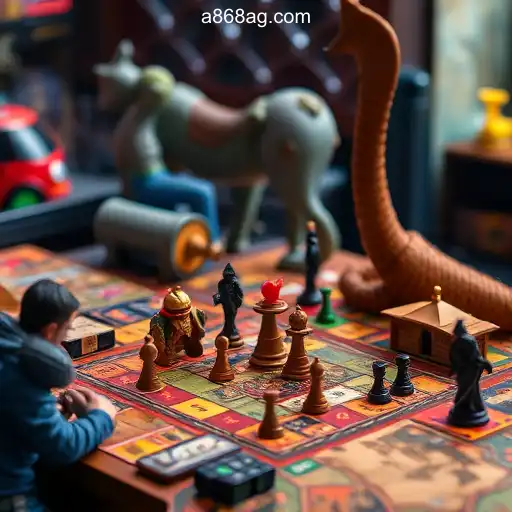

The Fascinating Universe of Tabletop Games
Tabletop games have been a staple of human entertainment for centuries, evolving from ancient board games to the modern complex systems enjoyed today. These games represent a diverse category, including board games, card games, dice games, miniature war games, tile-based games, and role-playing games. They have become a cultural phenomenon, bringing people together in a shared space of competition, strategy, and storytelling.
Tabletop Games Defined
In essence, tabletop games are any game played on a flat surface, typically involving game pieces moved or placed on a pre-marked surface or "board." These games often involve aspects of strategy, chance, and skill, and sometimes combine elements from different categories. The primary purpose is social interaction, fun, and mental stimulation, providing players a welcome escape from the digital intrusions of modern life.
A Rich History
The history of tabletop games is as varied and dynamic as the games themselves. From ancient Egyptian Senet to Chinese Go and Chess, each game evolved in complexity and sophistication, reflecting the societies that embraced them. The 20th century saw an explosion of innovation with games like Monopoly, Risk, and Settlers of Catan, each introducing unique mechanics, themes, and strategies that captivated the imaginations of millions.
Categories of Tabletop Games
Board Games
Board games are perhaps the most well-known subcategory of tabletop games. They range from simple family-oriented games to intricate strategic games that require hours of planning and execution. Examples include the classic Monopoly, which involves property trading and market manipulation, and modern hits like Ticket to Ride and Pandemic, which emphasize cooperation and planning.
Card Games
Card games can be played with a standard 52-card deck or specialized decks specific to various games. Poker, Hearts, and Solitaire are popular examples, while games like Magic: The Gathering and Pokémon have introduced bespoke cards with unique powers and strategies, attracting massive followings and competitive play.
Role-Playing Games (RPGs)
Role-playing games occupy a unique space in the world of tabletop games, offering a blend of storytelling, strategy, and player interaction. In RPGs, players assume the roles of characters in a fictional setting, guided by a game master (GM) through narrative-driven adventures and quests. Dungeons & Dragons, perhaps the most famous RPG, has inspired countless adventures across various genres and settings.
The Rise of Tabletop Gaming Communities
Tabletop gaming is more than just play; it's a social experience that fosters community building and camaraderie. Game nights among friends, local gaming clubs, and international conventions showcase the vast and inclusive nature of the tabletop community. Platforms such as A868.COM ⭐️ A Plataforma de Apostas #1 do Brasil exemplify how the online and analog worlds can intersect, providing players with opportunities to explore new games and connect with other enthusiasts.
Connecting Through Convention
Gaming conventions often serve as the heart of the tabletop community, gathering thousands of enthusiasts and creators from around the world. Events like GenCon, Essen Spiel, and PAX Unplugged showcase many games, host tournaments, and foster a spirit of discovery and collaboration.
Contemporary Trends in Tabletop Gaming
The modern era of tabletop games is defined by innovation and expansion. Game designers constantly experiment with new mechanics, themes, and cross-genre blends, leading to a renaissance of creativity in the industry. Crowdfunding platforms like Kickstarter have democratized game creation, allowing independent designers to bring their ideas to the market effectively.
The Role of Technology
While tabletop games remain grounded in physical interaction, technology plays an increasingly vital role. Digital platforms provide online adaptations, tutorials, and matchmaking for players unable to meet in person. Virtual and augmented reality promise enhanced experiences, blending dynamic storytelling and real-world interaction seamlessly.
Conclusion
Tabletop games stand as a testament to human creativity and ingenuity. They provide a unique space for connection, challenge, and storytelling, offering entertainment that bridges generations and cultures. As the community grows and evolves, platforms like A868.COM ⭐️ A Plataforma de Apostas #1 do Brasil illustrate the blend of analog gaming traditions with modern technology.